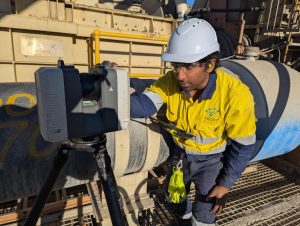


Corrosion isn’t always the first thing considered when designing a school, hospital or public building. Yet decisions made during design – from the grade of stainless steel to the detailing of a galvanised connection – can determine how much maintenance a building needs over its service life.
In Western Australia, coastal exposure and local environmental conditions can significantly affect structural steel, architectural metalwork, cladding, and fixings. A standard material specification may not suit every site, even within the same suburb.
For architects working on Department of Housing and Works (DHW) projects, corrosion protection is also addressed by Technical Guideline TG016.
This article explains when specialist corrosion input is required, what a Corrosivity Assessment and Corrosion Mitigation and Design Review (CMDR) involve, and how these assessments can help avoid problems later in a project.
What does DHW TG016 require?
DHW Technical Guideline TG016, Corrosion Protection sets out requirements for assessing site corrosivity and specifying suitable materials for applicable government building projects. Section 2 requires site-specific atmospheric corrosivity to be assessed in accordance with AS 4312.
Under TG016, an AMPP Accredited Corrosion Technologist must be engaged, unless otherwise agreed with DHW, where the project is within 5 km of a coast, river, industrial area or another corrosive environment and the apparent atmospheric corrosivity category is C4 or C5. The guideline also includes additional material specification requirements for buildings of two storeys or more on C3 sites. These conditions should be checked at the start of a project. The 5 km distance alone does not establish a C4 or C5 classification, and TG016 should not be described as applying to every building project in WA.
What is a Corrosivity Assessment?
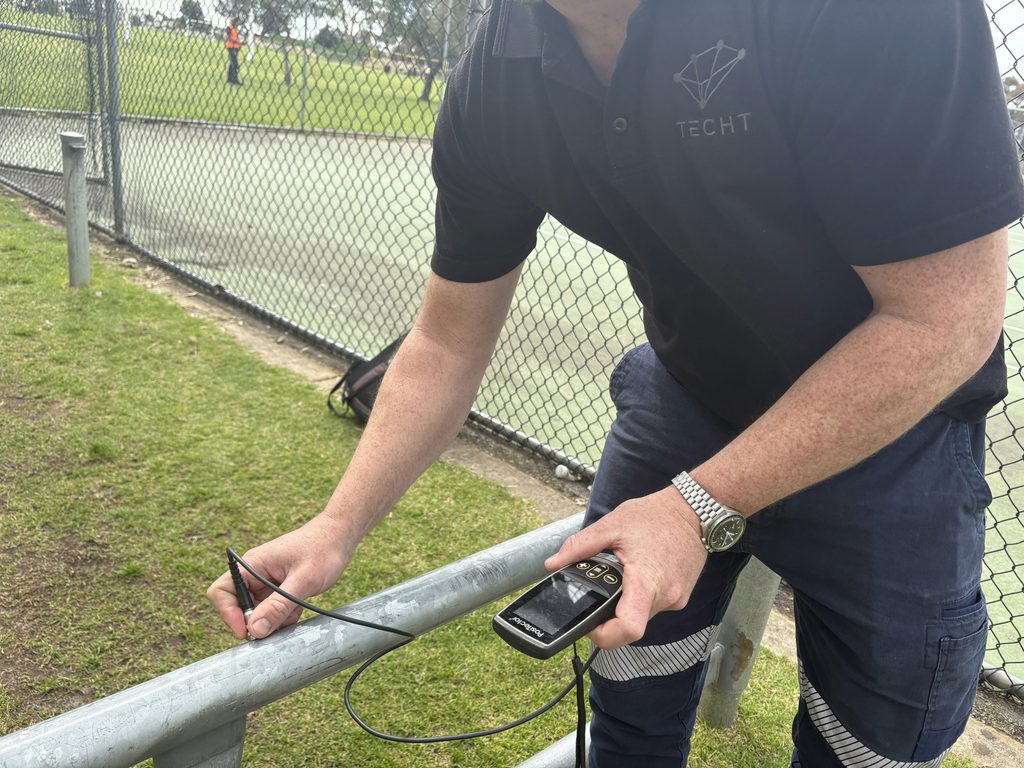
A Corrosivity Assessment establishes the environmental conditions likely to affect the long-term performance of building materials and corrosion protection systems. Proximity to the ocean is a useful starting point, but it does not tell the whole story.
Two buildings at a similar distance from the coast may have quite different exposures. Prevailing winds, shelter from nearby structures, and the extent to which rain can wash salt deposits from surfaces all influence local exposure. Sheltered steelwork, for example, may accumulate salts that remain on the surface for extended periods.
Depending on the project, an assessment can include a review of environmental information, inspection of nearby buildings and structures, evaluation of existing coating and galvanising performance, and chloride deposition measurements where appropriate. The findings are used to determine the relevant atmospheric corrosivity category with reference to AS 4312 and, where applicable, ISO 9223.
The result is a defensible basis for specifying materials and protection systems. It can identify components needing more robust protection, but it can also help avoid specifying unnecessarily expensive systems across the entire project.
What is a Corrosion Mitigation and Design Review (CMDR)?
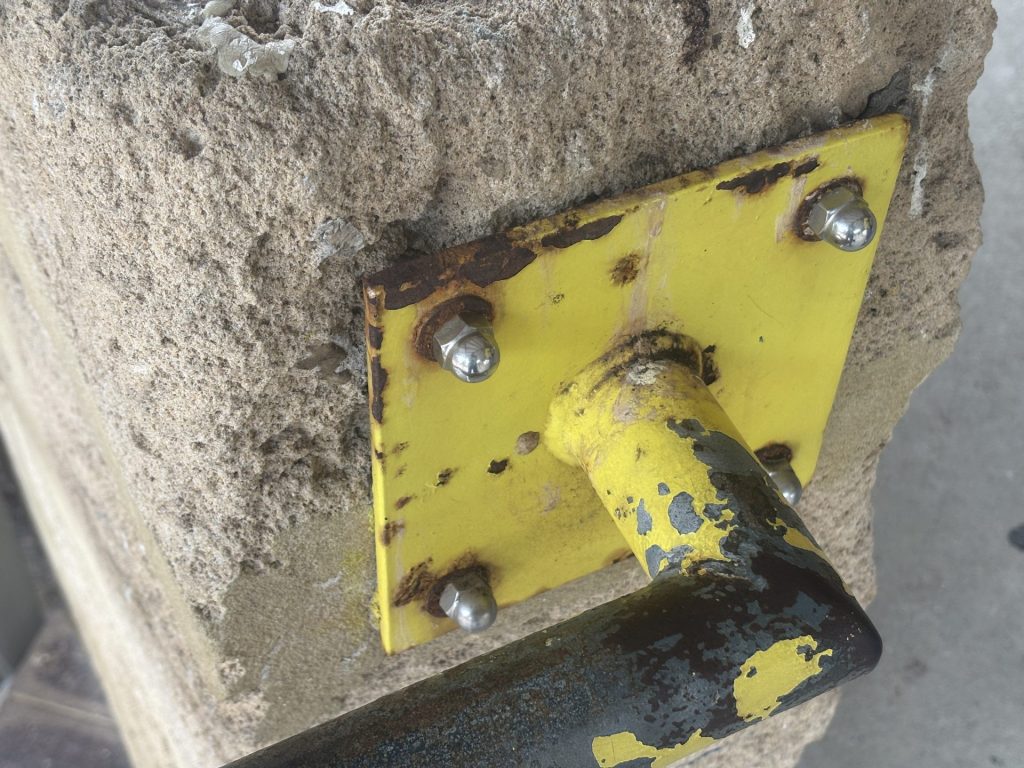
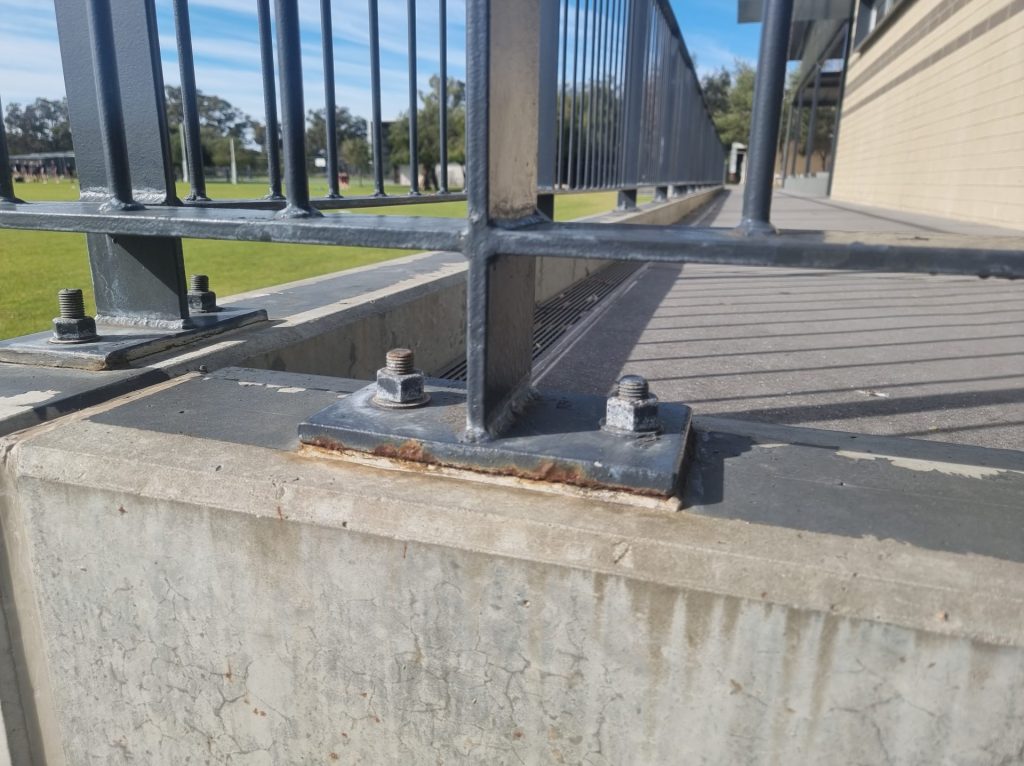
A Corrosivity Assessment considers the environment. A CMDR looks at the design and if the proposed materials, finishes, and construction details are suitable for that environment and the intended service life. The review typically covers structural steel coatings and galvanising, stainless steel grades, aluminium finishes, fasteners, dissimilar-metal connections, concrete durability and access for inspection and maintenance. It also looks for details that can retain water or create crevices.
For instance, specifying “stainless steel” without nominating a suitable grade and finish may not be enough in a marine environment. Likewise, the expected life of galvanised steel depends on zinc coating thickness, exposure and detailing. A connection that traps water can create a maintenance issue even where the nominal material selection is sound.
A CMDR is not intended to redesign the building or compromise its appearance. Its purpose is to flag foreseeable corrosion risks and provide practical recommendations that the architect and design team can incorporate into drawings and specifications.
Building design life and sustainability
Many public buildings are designed for a service life of 50 years or more, although the required design life depends on the project. Achieving that service life is not simply a matter of selecting durable materials. The materials, protective coatings, specifications, and construction details all need to be suitable for the site conditions, with appropriate maintenance considered from the outset.
For example, an unsuitable coating specification or a poorly detailed steel connection may lead to corrosion well before the building reaches its intended service life. A Corrosivity Assessment and CMDR can help identify these risks while the design can still be changed.
There is also a sustainability benefit. Keeping steelwork, fixings and other building components in service for longer reduces the need for premature replacement, along with the associated consumption of materials, manufacturing, transport and waste. Good corrosion protection helps make better use of the resources already invested in public buildings.
When should architects engage a corrosion specialist?
Ideally, before materials and finishes are finalised. At that stage, changing a fixing grade, adjusting a drainage detail, or selecting a different coating system is usually straightforward. Once components are fabricated or installed, the same change may involve variations, delays, or difficult access.
Early input is particularly useful for coastal schools, hospitals, civic buildings, and other facilities where a long service life and manageable maintenance costs are expected. It can also help the design team distinguish between highly exposed components and those in less aggressive locations, rather than applying one solution everywhere.
A Practical Coastal Building Example
Consider a school near the WA coastline with galvanised steel framing, powder-coated aluminium, stainless steel fixings, and exposed architectural metalwork. These are all familiar construction materials, but their performance depends on where and how they are used.
An assessment of the site and nearby structures may indicate that some components need additional corrosion protection. The subsequent CMDR may identify a different stainless steel grade for exposed fixings, improved drainage at connections, or a revised coating specification. Such changes are simpler to make on the drawings than after the building has been handed over.
Who is TECHT?
TECHT is an independent engineering consultancy specialising in corrosion, durability, materials performance, and asset integrity. Its ArchiTECHT division works with architects, engineers, and design teams on Corrosivity Assessments, CMDR, material selection, and protective coating specifications.
The team includes AMPP Accredited Corrosion Technologists and AMPP Senior Coating Inspectors. TECHT also operates a NATA-accredited laboratory, with accredited testing available for activities within its scope of accreditation. This combination of site experience, engineering assessment and laboratory capability supports practical recommendations and construction-stage quality assurance.
Source: Department of Housing and Works, TG016 – Corrosion Protection (November 2025): https://www.wa.gov.au/system/files/2025-11/tg016-corrosion-protection.pdf
Design decisions influence how a building performs for decades. Addressing corrosion at this stage helps protect the investment by reducing the risk of premature deterioration, costly repairs, and unnecessary material replacement.
A site-specific Corrosivity Assessment establishes the exposure conditions, while a CMDR checks that the proposed materials and details are appropriate. Together, they help architects balance upfront costs with durability and future maintenance needs.
For projects covered by DHW TG016, architects should also check early whether the guideline requires engagement of an AMPP Accredited Corrosion Technologist.
Involving a corrosion and durability specialist such as TECHT while the design is still taking shape helps architects resolve these issues before construction, giving the building a better foundation for a long service life.
So if you’re planning a school, hospital, government, or coastal building project, TECHT can assist with Corrosivity Assessments, Corrosion Mitigation and Design Reviews, specification advice, and coating
inspections.